BACK
Jan 23, 2026
The future of product design
Design teams are changing.
How you look for work and hire designers is changing FAST.
AI literacy is a baseline
Designers are shipping to production, no more “handoff” mindset,
PM’s are prototyping pros, long specs are out,
Fast iterations are in.
Design and product lines are blurred, and the merger is only accelerating.
More importantly, the craft bar keeps rising. Good is no longer good enough, and taste becomes leverage. pm/engineers with strong product taste will stand out.
In this article, I explore alongside Chhavi, Vitor, Felix, Pete and Ridd the future of product design.
TL;DR:
AI is making the best designers more productive
Hands-on is the new default, regardless of level
You need to be fluent in systems NOT just pixels
The role of a 'designer' will shift to being a curator.
Show actual work to find a new job
Design/eng/product roles are merging QUICK
———
AI is making designers more productive
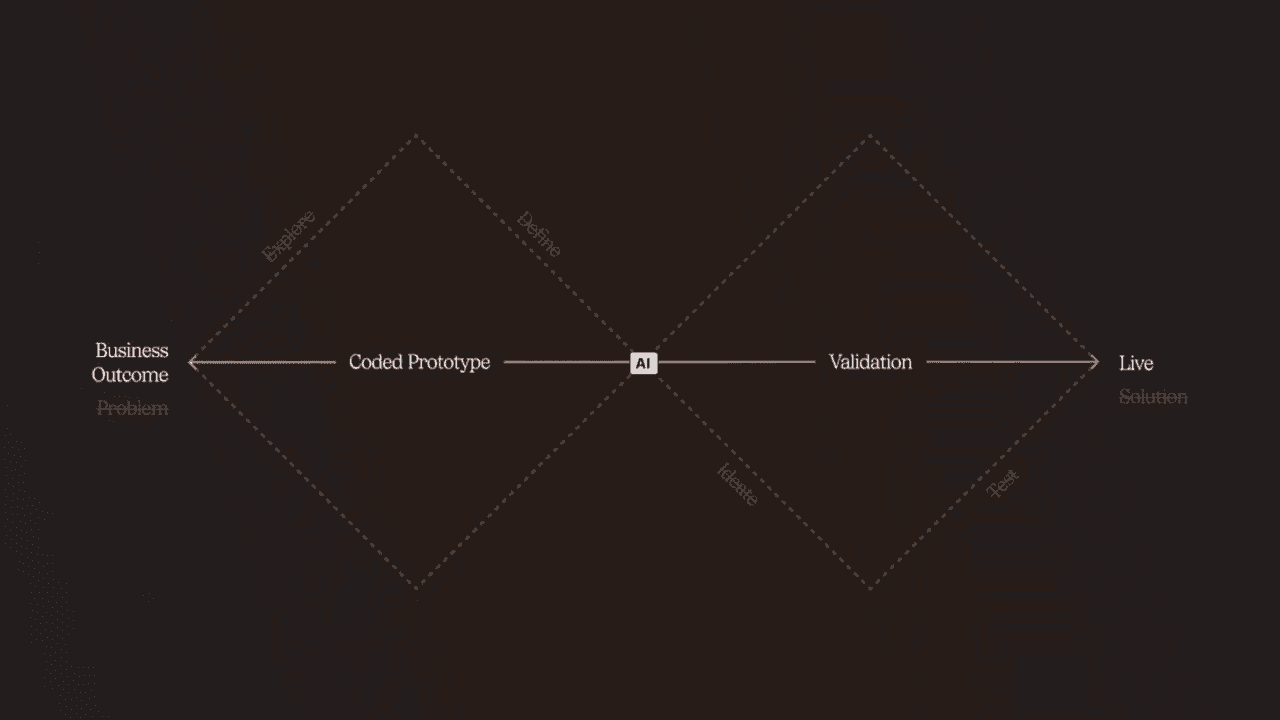
The best teams no longer waste cycles on concepts that don’t move the needle. The traditional separation between discovery and delivery is fading, and AI is giving us the tools to experiment, iterate, and deliver high-quality results quickly.
AI is here - embrace it. Long documentation and “process for the sake of process” are losing relevance. Keep it simple and smart. Take on different roles when needed, whether in product management, design, or development. AI is flattening the skill gap between disciplines: designers can code, and product managers can prototype. This flexibility benefits everyone.
The real output now is a functional, learning-oriented product or feature shipped quickly. Endless documentation and non-functional prototypes are no longer the priority. AI shortens the process, freeing time to focus on the details that were often neglected due to time constraints.
AI is raising the bar for my design work, helping me work smarter. I use every available resource to achieve in minutes what used to take hours. For example, I can process massive amounts of customer data and extract actionable insights faster, or create prototypes that are already close to production by using tools like Cursor, connected to the design library, with real code, components, and behaviors. The quality isn't great yet, but it will get there soon. - Vitor Amaral
Hands-on is the new default
You can’t afford not to be closer to the work. You can’t underestimate how quickly things are changing.
Being craft-focused means staying hands-on, regardless of specialty or seniority. This won’t be a niche role, it will be an expectation for everyone, from individual contributors to VPs. The value lies in deeply understanding how things actually work, and that comes from direct involvement in the work.
As AI speeds up execution, the craft itself will become easier, but what will matter most is the critical judgment to craft the right thing, move fast, and push the boundaries of quality.
I think Punk is coming back… not the tattoos and loud music, but the mindset. We’ve made it too easy to look polished and corporate, and it’s everywhere. That perfection now feels hollow. People will crave authenticity and experience that reflects real life’s imperfections, not just glossy ideals. Craft-focused designers will need to break some rules, unlearn old habits, and embrace a little chaos. David Carson’s Ray Gun magazine is a great place to draw inspiration.
I’ve gone all-in on the IDE… but I’m also back to pencil and paper for my mocks. The rise of LLMs has turned the terminal into another design tool in the box. At the end of the day, digital design tools are just interfaces that abstract the code away. Now, if you can clearly articulate what you want and have a bit of data to play with, you can bring ideas to life almost instantly, without being boxed in by the limitations of a specific tool.
What I see AI-native companies want at every level:
People who miss being an IC and love being hands-on. They are a true builder.
Use AI tools regularly, constantly exploring new tools. Energised by new ideas.
See AI as transformational and not tactical.
Do not underestimates AI, always up-skilling to stay relevant.
Use live tests or prototypes to move forward, not reliant on old playbooks that worked in the “pre-AI” era.
Thrives in ambiguity, because there is a lot of it.
Companies want to hire people who think in systems AND pixels
As a designer in 2025 you need to think in systems, understanding how your work fits into the bigger product, business, and technical ecosystem.
You also need to be able to ship fast, because speed from idea to working product matters more than polish; even if you’re not technical, knowing how to get something in front of real users quickly becomes a real moat.
It’s essential to be good with AI, not just using tools on the surface, but knowing how to prompt, iterate, and integrate them into your workflows so they genuinely elevate your output.
And finally, taste is non-negotiable. AI can make something functional, but it’s taste that makes the work stand out. - Felix Haas
From the candidates that I have placed in 2025 and companies I’m working with who I see are in most demand are:
Understand business + product
High empathy for customers
Can handle ambiguity
First principles approach
Can work with Eng to ship work or code
"Deep generalists" with impeccable visual skills
Becoming or are an AI-native designer in the day to day.
Fluent in system thinking and product architecture
The role of a 'designer' will shift to being a curator.
The role of a designer will shift from specialist—whether in UX, UI, or motion—to curator, someone who is assembling, adapting, and directing AI-generated work into great products.
Most of the “craft” we think of as uniquely human will be automated, but creativity itself will expand, not shrink.
The gravitational pull is toward product builders, people who can think in systems, design with taste, and ship without waiting on someone else. Specialists will still exist, but mostly in very high-end, niche areas like motion, 3D, or brand. In startups especially, speed and adaptability will beat narrow expertise.
What is becoming less relevant as a designer are pixel-perfect wireframes as a deliverable, since AI is replacing the wireframe, weeks of UI exploration without shipping anything, and hand-off documentation between designers and engineers, as AI will automate much of that. - Felix Haas
What I don’t think AI will replace in design:
Natural gut/taste.
Raw creativity
You NEED to change how you find a job
Start building a real product and get a feeling for it what it means pushing something out in the market
Learn to use AI to prototype interactively → even at a basic level
Get comfortable with AI tools early → they’ll be your co-designer / sparring partner
Focus on solving real problems, not just making things look good (Which was a problem for very long in the design space)
I can tell you how true this is. I was contacted by a 19-year designer in early 2025. He's self-taught and has 3 years commercial experience. His visual work blew me away. His level of visual and interaction design is one of the best I've seen in a long time. It made me think, what is the best route into design? He literally got a job by exploring, showing value, honing his craft.
Design roles are merging
We are seeing a collapse of design’s monopoly on ideation where designers no longer “own” the early idea stage. PMs, engineers, and others are now prototyping directly with new tools.
If designers move too slow, others will fill the gap. The line between PM, engineer, and designer is thinner than ever. Anyone tool-savvy can spin up prototypes — which raises the bar for designers.
Impact comes from working prototypes, not just facilitation. Leading brainstorms or “owning process” isn’t enough. Real influence comes from putting tangible prototypes in front of the team and aligning everyone around them.
Design is still best positioned — but not guaranteed
Designers could lead this shift, but only if they step up. Ownership of ideation is earned, not assumed. - Ridd
I do think this is a call to action to bolster your skillset where you need to do in the AI-native world. Everyone can learn how to be a versatile product/design/eng hybrid. It’s never been easier.
To conclude, I loved Chhavi’s advice that designers need to create a personal syllabus and build instead of theorise.
A quick prototype beats a long Google Doc of abstract ideas.
You have to get comfortable with discomfort. Right now it feels easier to just move pixels yourself or make the deck yourself, but learning a new tool, hitting its limits, or breaking old habits—those little compounding shifts are how you future-proof.
Always ask: “is there an easier way to do this?” Before you spin up a whole deck, could ChatGPT outline it for you? Before you prototype a tricky filtering flow, should you try Lovable, Magic Patterns, or Bolt?
How to create a personal AI syllabus:
Don’t wait for a company course - make your own.
Spend 20 minutes daily or two hours on weekends.
Pick two or three tutorials.
Get a premium subscription to a tool and play.
Treat it like a mini-course for yourself.
Design is changing fast. AI isn’t a threat but a new era to embrace and help shape.
We need to not underestimate AI and overestimate our skills. We need to change, we need to learn, we need to adapt, with urgency.
The new generation is here. What are you doing to bring it into your context?
Until next time!
More